
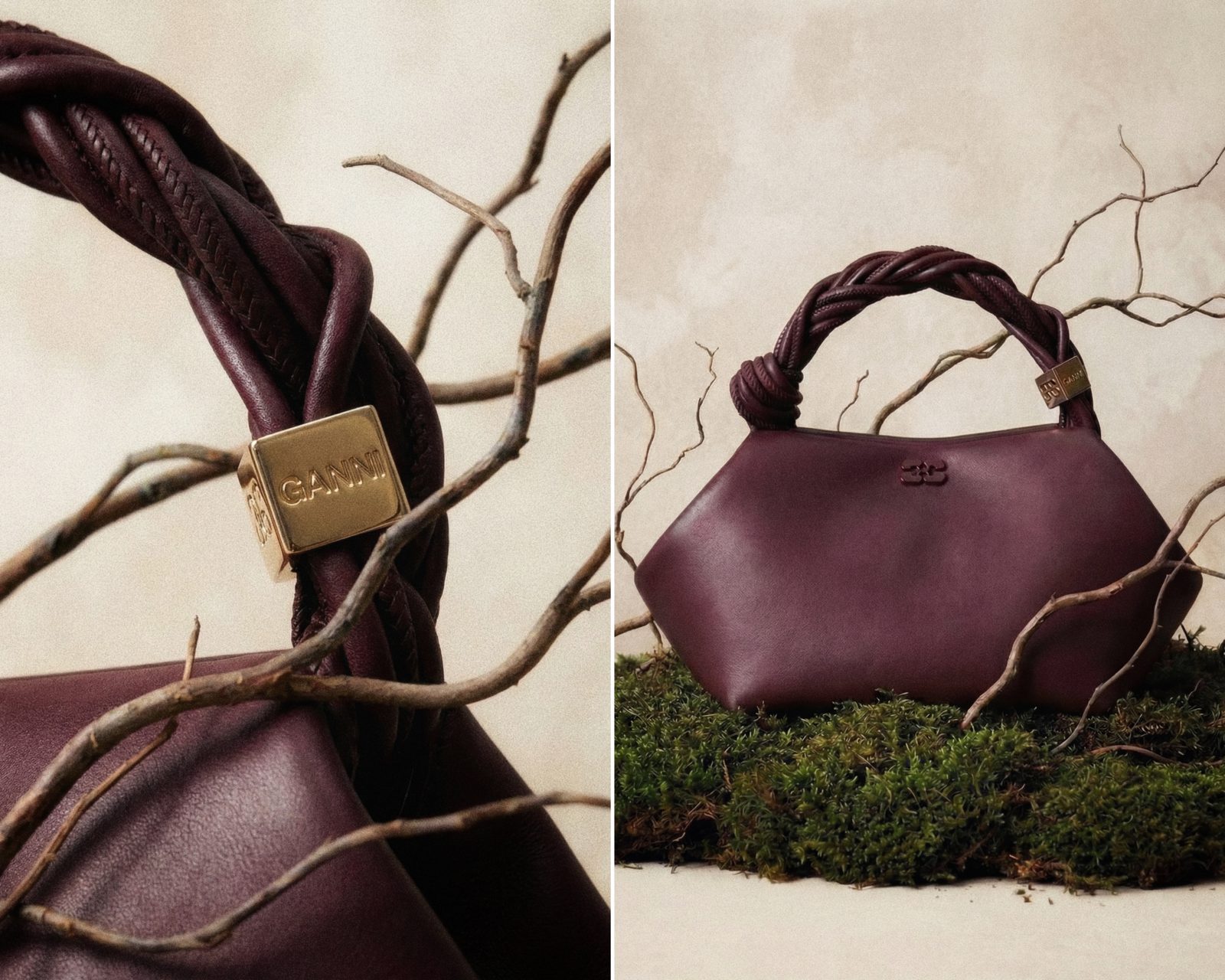
AI Product Photography: The Catalog-to-Campaign Playbook for Brand Owners
Every consumer brand now runs a small media company whether it wants to or not. Here is how the catalog-to-campaign pipeline actually works, what it costs, and where it breaks.
In the fourth quarter of 2024, about 70% of Zalando’s editorial campaign images were AI-generated, and the company told Reuters the switch cut production from 6 to 8 weeks down to 3 or 4 days, at roughly 90% less cost. Read that again as a brand owner, not as a tech headline: the largest fashion platform in Europe now produces campaign imagery in the time it takes most brands to get a photographer’s quote approved. That is the new baseline your product pages, ads, and social feeds are being judged against.
The good news is that the pipeline Zalando built is not magic, and a version of it is available to a 5-person brand. The bad news is that most of what gets sold as “AI product photography” produces images that make your brand look cheaper, and the difference between the 2 outcomes is a production discipline almost nobody explains. This playbook explains it.
What AI Product Photography Actually Is
AI product photography is the use of generative models to produce commercial product imagery: placing a real, photographed product into generated scenes, onto generated models, or into new formats, instead of shooting every variation in a studio. The product itself stays real; the context around it becomes software.
That definition contains the entire discipline. The brands doing this well, from Zalando’s digital-twin pilot to Mango’s AI-generated teen campaign, all start from accurate photography of the actual product and use AI to multiply it. The brands doing it badly start from a text prompt and end up with a product render that does not match what ships. One is a production method. The other is a returns generator with good lighting.
What It Replaces, and What It Doesn’t
AI replaces the marginal shot: the 14th angle, the seasonal background swap, the 9 channel formats, the lifestyle context for a marketplace ad. It does not replace the foundational capture of the product, and it does not replace art direction. If anything it makes both worth more, because once image volume stops being scarce, taste is the only thing left to compete on, and taste does not come in a subscription. We argued the quality half of that in what decides whether AI helps your brand or cheapens it; here we get into the plumbing.
The Economics: Why the Studio Math Broke
Run the math on your own catalog and the problem shows itself. Take a 200-SKU assortment. Each SKU needs a product-page set (call it 5 images at the low end of the 5-to-8 baseline we lay out in the jewelry photography pillar), plus 2 social sizes, an email cutout, and 2 ad formats. That is 10 assets per SKU, 2,000 per season, before a single campaign image, and every price drop, holiday, and platform format change adds a fresh layer on top. No studio calendar survives contact with that number, which is why most brands ship a fraction of the visual coverage their channels could absorb and let the rest of the demand go unmet.
Notice what kind of cost this is. Photography is one of the few line items where the unit economics flipped an order of magnitude in 2 years while most owners kept budgeting as if the old price were a law of nature. The brands that noticed are not spending less on visuals; they are buying 10 times the coverage for the same money and letting the extra coverage compound in ad testing, marketplace slots, and feed volume. The budget question has moved from “can we afford more images” to “what would we do with 2,000 of them,” and owners who cannot answer the second question are the ones the pipeline will not help.
The Zalando numbers above are what happens when the constraint gets removed: 6 to 8 weeks becoming 3 to 4 days is not a cost story, it is a speed story. A brand that can produce imagery in days reacts to a trend while it is still a trend. That reaction speed, more than the 90% cost line, is what you are actually buying when you build this pipeline.
The 5-Step AI Product Photography Pipeline
Every serious implementation we have seen, from platform-scale operations down to boutique brands, runs some version of the same 5 steps. Skip one and you get slop.
Step 1: Capture the Truth
Everything starts with clean, accurate, well-lit photography of the real product: the ground truth the whole pipeline multiplies. Shoot it once, shoot it properly, on neutral background, with color managed. Mango’s process is instructive here, and it surprises people: their first AI campaign began with a full shoot of every real garment in the collection, because the generative model was trained on those photos. The AI never invented the product. Under-invest in this step and every downstream image inherits the flaws at scale.
Step 2: Lock the Product
The core technical problem of AI product photography is product fidelity: a diffusion model left to its own devices will redraw your product, changing stitching, proportions, label type, stone count. The fix is to lock the product pixels and generate only the context. In practice that means background-replacement workflows (Photoroom and its competitors, Adobe Firefly’s generative fill), product-locked generation where the original photo is composited into the scene, or trained custom models for brands with the volume to justify them. The test is unforgiving and simple: overlay the output on the original capture. If the product moved, the image is unusable, whatever it looks like.
Step 3: Generate the Scene
With the product locked, context becomes nearly free: a marble bathroom shelf for the serum, golden-hour terracotta for the sandal line, a kitchen counter for the toaster. Amazon built this exact capability into its ad console, and its own testing is the reason: Amazon says click-through rates on mobile Sponsored Brands ads can be 40% higher when the product sits in a lifestyle context instead of on a white background. Treat that number for what it is, the platform selling its own tool, but the direction matches what every owner sees in ad accounts: context outperforms cutouts. Google’s Product Studio does the same job inside Merchant Center for Shopping imagery. The scene layer is also where category risk lives, and it differs sharply by vertical: what breaks for a gold chain is different from what breaks for a knit or a lipstick, which is why we maintain separate playbooks for AI jewelry photography, AI fashion models, and cosmetic product photography.
Step 4: Art-Direct the Output
Generation is casting a wide net; the brand lives in the selection. Mango’s release says the art team “selected, retouched, edited and mastered” the AI images in the photography studio before anything shipped, and that sentence is the least glamorous and most important one in their whole announcement. A human with taste and the brand book open kills 9 images out of 10, fixes hands and hems, matches the color grade to the brand palette, and rejects anything that smells synthetic. Brands that skip this step are recognizable at a glance, and their imagery trains customers to expect a discount.
Step 5: Version and Distribute
This is where the ROI accrues. With the product locked, one clean capture becomes a library of genuinely different images: the serum as clean still life for the PDP, then in-use on a bathroom shelf, then a lifestyle frame for the feed, then an on-model or in-hand version for an ad. Each is a distinct scene generated for a distinct job, built around the same real product. That range is the entire point of the pipeline, and it is what a single studio booking could never hand you in a season.
That variety is what actually feeds the channels. A marketplace listing wants lifestyle context sitting next to the white-background hero; social wants in-use and lifestyle; email wants a seasonal scene; and paid ads want the most versions of all, because you cannot A/B test your way to a winning creative without a real stack of alternatives to run. 1 product and 1 clean capture, turned into a dozen atmospheres built for a dozen destinations, is the output that makes performance media affordable to feed. Map every image to a destination and a test before you generate it; the channel plan is the brief.
Where AI Product Photos Fail
Almost every AI image that should never have shipped fails in one of 6 predictable ways, and the category you sell in decides which one comes for you first.
Product Fidelity
Jewelry is the extreme case: faceted stones and polished metal are precisely the surfaces generative models render least honestly, and a customer paying $2,000 for a ring will notice. The model smooths a cut, invents a facet, softens an engraving, and the piece on screen stops being the piece in the box. The rule set for that category is strict enough that we wrote it separately in AI jewelry photography.
Scale and Fit
Generative models have almost no innate sense of scale. Left alone, they will float a cocktail ring the size of a knuckle onto a finger, drape a dress that ignores where a real seam or hem falls, or sit a watch on a wrist at a size no catalog would ship. Getting a product to actually sit on a body, a ring seated on the right part of the finger, a garment falling with real weight, is not a prompt you type once; it takes someone who knows both how the product is worn in life and how to push the model until the placement is honest. Scale is where amateur AI imagery gives itself away fastest, because the eye reads a wrong proportion before it reads anything else.
Angle and Occlusion
A source photo shows one side of the product. The moment you ask for an angle that reveals a face the camera never captured, the model has to invent the geometry, and it invents badly: a clasp that does not exist, a back panel that contradicts the front, seams that drift between frames. On anything with fine detail it also quietly loses things, a missing stitch, a dropped prong, a small stone gone between generations. Producing a genuinely new angle without mangling the design is one of the hardest things in this whole pipeline, and doing it so that not a single stitch, prong, or pavé stone is lost from the original is the line between a usable second angle and a support ticket.
People and Likeness
The moment AI generates a human being wearing your product, you inherit a rights question, a disclosure question, and a public-opinion question. H&M and Levi’s have both been through this in public, with instructively different results; the full breakdown is in AI fashion models.
The Uncanny Valley
Even with the rights clean, a generated person can land in the uncanny valley: near-human enough to read as a real model, off enough that something feels wrong. Skin too even, eyes that do not quite track, a hand carrying one knuckle too many. Customers rarely name it; they just trust the brand a little less and keep scrolling. For a category that sells desire, an image that makes people faintly uncomfortable is worse than no image at all.
Texture and Color
Beauty buyers purchase a shade and a texture, and an AI that shifts either by 5% has misrepresented the product as surely as a wrong price tag. A lipstick that renders a half-tone warmer, a knit that loses its slub, a foundation that reads matte when it is dewy, each one turns a delighted buyer into a return. Where the line sits for swatches, textures, and on-skin imagery is covered in cosmetic product photography.
Build, Buy, or Hire: 3 Ways to Run the Pipeline
Every brand ends up in one of 3 configurations, and picking the wrong one wastes a year.
Self-Serve Tools
Photoroom-class apps, Adobe Firefly inside Creative Cloud, and their competitors give a small team background replacement, cleanup, and generative expand for roughly the price of a software subscription. This tier works when the assortment is small, someone in-house has a trained eye, and the ambition is clean PDP sets plus steady social output. Its ceiling is exactly that eye: the tools produce whatever taste operates them, and Adobe’s enterprise pitch (Firefly trained on licensed content, positioned as commercially safe) solves the legal exposure, not the aesthetic one.
Platform-Native Generators
Amazon’s ad-console image generator and Google’s Product Studio inside Merchant Center produce lifestyle contexts for the exact surfaces they serve, at no extra tool cost. Use them for what they are: free CTR harvesters for marketplace and Shopping placements, tuned to each platform’s formats. What they are not is a brand system; imagery generated by a retail platform looks like imagery generated by a retail platform, and it never leaves that ecosystem carrying your art direction with it.
A Production Partner
The third configuration is hiring the pipeline whole: capture, product-locking, generation, art direction, and channel versioning run by a team that has already made every mistake in the first 2 tiers on someone else’s catalog. It fits brands with real assortment breadth, a standard worth protecting, and zero desire to turn a founder or a marketing lead into a part-time creative-ops manager. Evaluate that team with the checklist that closes this article, and hold us to the same 7 questions as everyone else.
The Creative Upside: Real Product, Unreal World
Everything above is about making AI imagery look real, but accuracy is only half the value. For a creative brand the goal is often the opposite of natural: putting the real product somewhere it could never actually be. This is not faking the product, it is placing a real product in a deliberately unreal world, and it runs on the same locked-product discipline pointed at imagination instead of realism.
The proof is already famous. In April 2023 Jacquemus sent giant Bambino bags rolling like cars through the streets of Paris, a clip made by 3D artist Ian Padgham and his studio Origiful that drew tens of millions of views and launched the “fake out-of-home” trend (Paper). Maybelline followed with giant mascara wands brushing lashes mounted on London buses and tube trains, the same creator, the same trick. In every case the product was the real product; only the world around it, the scale, the setting, the physics, was built.
That work was done in high-end CGI, and it was slow and expensive. AI now does much of it faster and cheaper, which extends the economics of the pipeline into creative territory: a brand can test a surreal concept in a day instead of commissioning a studio. Be honest about the boundary, though. AI already handles still surreal frames and simpler motion well; the most complex physics, a bag tumbling with convincing weight, liquid and cloth behaving exactly right, still favors dedicated CGI. Use AI for the concept and the volume, and reach for CGI when the physics has to be flawless. The product stays real either way. Only the world gets impossible.
What the Disclosure Rules Actually Require
The regulatory picture has 2 halves, and only one of them has a fixed federal date. In the EU, transparency obligations under Article 50 of the EU AI Act begin applying on August 2, 2026: providers of generative systems must mark synthetic output in machine-readable form. The US has no single equivalent moment, and that is the part most brands misread. Its lever is the Federal Trade Commission, which can already act against deceptive imagery under its longstanding Section 5 authority, with or without a dedicated AI statute.
That authority now has sharper teeth. The FTC’s Consumer Reviews and Testimonials Rule (16 CFR Part 465), in effect since October 21, 2024, bans fake and AI-generated reviews and fake social-media indicators, with penalties up to $51,744 per violation, and the FTC’s Endorsement Guides now say plainly that a “virtual influencer” or AI-generated endorser is still an endorser that has to be disclosed.
The sharpest signal, though, is coming from the states, and New York is the one to read as precedent. Its AI disclosure law, SB 8420-A, takes effect June 9, 2026, and it is the first in the country to put a hard rule on synthetic people in advertising: any brand whose imagery is viewable by New York residents, wherever that brand is based, must conspicuously disclose when an ad features a “synthetic performer,” a digitally created person built with generative AI to look human without being a real, identifiable one. The label has to survive distribution, legible on mobile and persistent across cropped and resized versions, and each unlabeled asset counts as its own violation, at $1,000 for the first and up to $5,000 for repeats. California’s AI Transparency Act (SB 942) follows on August 2, 2026, the same day as the EU rule, pushing provenance marking onto the large AI providers themselves so the tools you use increasingly carry the label by default. 2 of the country’s largest consumer markets landing disclosure rules inside a single summer is not a coincidence; it is how a state patchwork becomes a national default, and it is safer to expect the rest to follow New York than to wait for Washington.
One distinction in these rules matters enormously for the pipeline in this article. New York’s and California’s laws, like the FTC’s endorser guidance, are aimed at synthetic humans: the AI model, the AI influencer, the digital performer, not a real product composited into a generated scene. Placing your actual serum bottle on a generated marble shelf is not what these laws police; generating a person to hold it is. The moment your pipeline crosses from product-and-scene into AI-generated people, the compliance bar jumps, and the checklist question about people below stops being an aesthetic choice and becomes a legal one.
The practical rule for a brand is simpler than any statute: do not deceive. Label AI where a reasonable customer would otherwise be misled, keep records of what was generated from what capture, and you are covered on both sides of the Atlantic, and on both coasts, well before any deadline arrives.
The Owner’s Checklist Before You Spend a Dollar
Before you sign with any AI photography vendor, tool, or team, put these 7 questions in the room:
- Do we have clean, color-managed capture of every SKU, or are we generating on top of bad photography?
- Can the vendor show the product-fidelity test: output overlaid on original capture, pixel-for-pixel on the product?
- Who art-directs the output, against what brand book, and what share of generations do they reject?
- Is there a channel map, so every image is generated for a destination and a format?
- What happens with people: real models, licensed digital twins, or none?
- How is AI-generated output marked and logged, for the FTC deception standard today and the New York, EU, and California disclosure dates arriving in 2026?
- What does the same budget buy in coverage: 40 hero images, or 1,800 channel-ready assets?
A vendor with good answers to all 7 is rare, which is the honest reason this article exists. Producing on-brand visual content at catalog scale, with the product locked, the output art-directed, and the formats mapped, is Tuple Strategy’s actual job, and it is the entire job: we do not sell audits or strategy decks, we produce the imagery. If you would rather run the checklist against us than build the pipeline yourself, start the conversation here.