
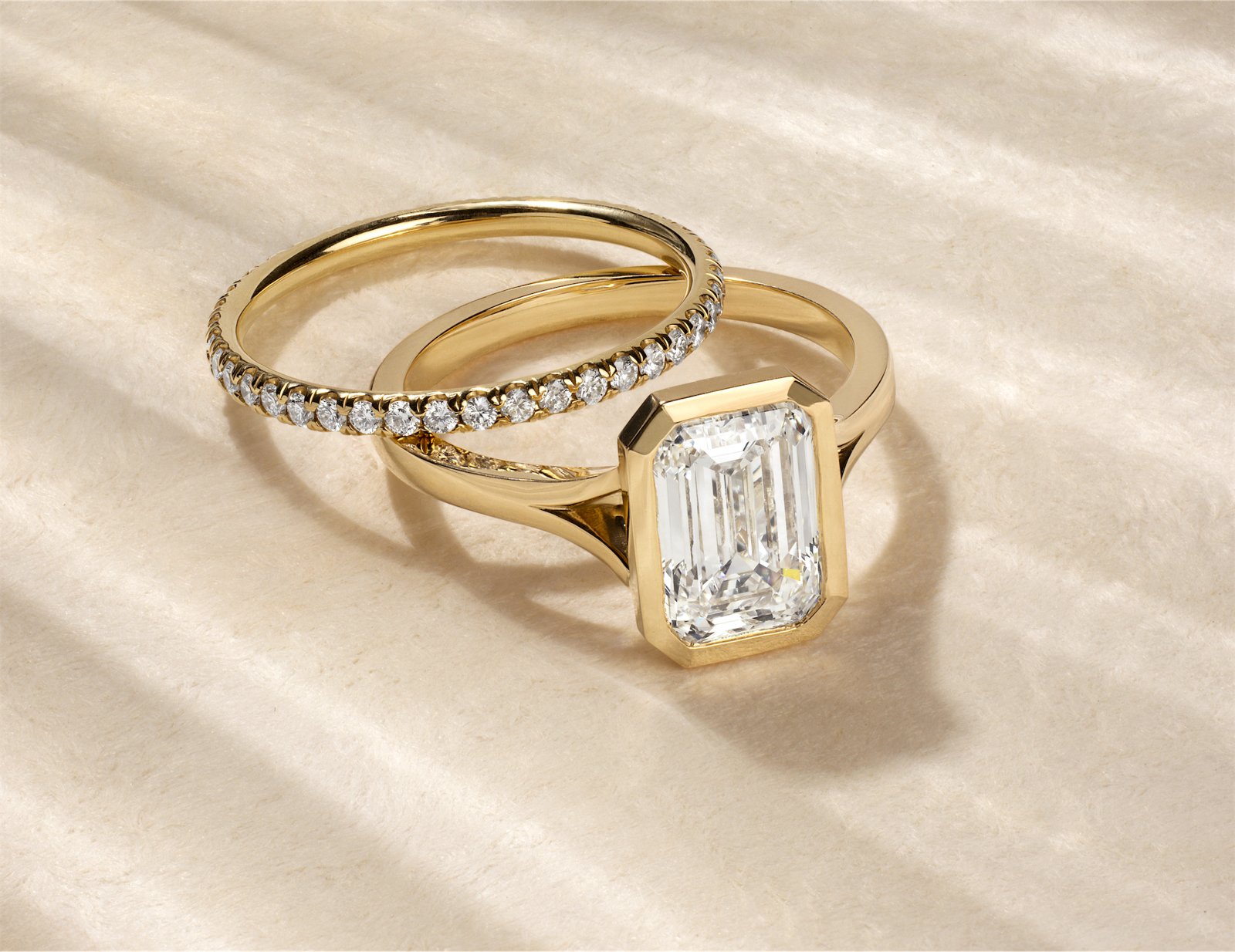
Engagement Ring Marketing: How Jewelers Win the Bridal Customer in 2026
The engagement ring is the single highest-stakes transaction in consumer jewelry, the purchase that funds roughly half of Signet’s business and most independents’ best quarters. And the customer making it is no longer the one the industry’s marketing was built for. The nervous man walking in cold with 2 months’ salary is a museum piece. Today’s buyer is a couple who started researching long before you knew they existed, and who have already seen your competitors’ rings in high resolution, dozens of times, on a phone. The headline number tells the story on its own: a majority of engagement rings now carry a lab-grown center stone, 61% for couples married in 2025, per The Knot Worldwide’s 2026 Real Weddings Study, at an average ring cost of about $4,600.
This is a category where the marketing problem is unusually well defined, because the buyer’s behavior is unusually well documented. What follows is what changed, what the winning jewelers are doing about it, and a playbook you can run against your own bridal counter. (If you want the wider view first, start with our jewelry marketing strategies guide; this piece goes deep on bridal alone.)
What Changed in Engagement Ring Buying by 2026
Lab-Grown Diamonds Took the Center Stone
Lab-grown did not just win on price, and that is the part most jewelers miss. It is cheaper, natural stones still command a real premium, and buyers who choose lab-grown tend to spend the savings on size rather than pocket it. But this stopped being purely a budget decision: a meaningful share of couples, roughly 4 in 10 by The Knot’s count, now say choosing lab-grown mattered to them on its own terms. The stone quietly went from default to deliberate choice, and that changes how you sell it.
Watch what the incumbents did with that information. De Beers spent years trying to turn lab-grown into a cheap fashion category through its Lightbox brand, then announced Lightbox’s closure in 2025 and redirected the facility to industrial stones. The same company had already teamed up with Signet on “Worth the Wait,” a campaign selling natural diamonds to couples in their late twenties across Kay, Zales, and Jared. Translation: the market split into 2 defensible stories, the value-and-size story (lab-grown) and the rarity-and-heirloom story (natural), and the biggest players are picking lanes on purpose. The jeweler with no stone story, the one whose website treats lab-grown as an awkward footnote, is marketing the unmarketable middle.
The Ring Is Now a Joint Purchase, so Market to 2 Buyers
The surprise proposal survived; the surprise ring mostly did not. Nearly 8 in 10 recipients now have a hand in choosing their ring, per JCK’s analysis of The Knot data, and a growing share of couples walk into a jeweler together before the proposal ever happens. The choreography is stable and worth memorizing: the recipient curates (saved posts, boards, hint drops, a “casual” walk past your case), the proposer executes (price research, vendor vetting, the actual transaction), and both touch your brand months apart through different channels.
Most jewelry advertising still speaks to exactly one of these people. A campaign built on “she’ll love it” misses the person who chose the ring; a campaign built purely on style inspiration never answers the questions of the person paying for it (certification, resale, financing, return policy). Your bridal funnel has 2 personas with different content needs and different clocks, and treating them as a single buyer is the most common self-inflicted wound in engagement ring marketing.
The 6-Month Research Window Is Your Real Selling Season
The purchase cycle is long, front-loaded, and seasonal. Most proposers start looking more than 6 months before they buy, typically around mid-summer, and finish the whole research-and-purchase run within a few months, per the same JCK readout. The proposals themselves then cluster into the stretch between Thanksgiving and Valentine’s Day. In-person still wins the close, but here is the figure that should reorganize your calendar: the average proposer visits only about 2 retailers before deciding.
Sit with that last number. By the time a couple walks through any door, the consideration set is functionally closed, which means the competition happened weeks earlier, on a phone, while you were running ads about your holiday sale. Getting into that short list is the entire game, and the list is built from search results, Pinterest boards, TikTok feeds, and a partner’s saved folder between July and October. Your December revenue is decided in the third quarter, and almost nothing you do in December will change it.
How Winning Jewelers Market Engagement Rings in 2026
Signet: A Database of Relationship Milestones
Signet Jewelers, the parent of Kay, Zales, Jared, and Blue Nile, leans on bridal for roughly half its sales, and its answer to the post-pandemic engagement drought was data, not discounting. The company built a proprietary database tracking up to 45 milestones in a couple’s dating journey, moving in together, meeting the parents, to predict when engagements will rebound toward pre-pandemic levels, as Forbes’ Pamela Danziger reported. Signet knows when your customers meet the parents before their parents do, and it times media accordingly.
The strategy is visibly 2-lane: “Worth the Wait” markets natural diamonds for the proposal itself, while lab-grown does the volume work across the rest of the assortment, and the mix has been lifting same-store sales at Kay, Zales, and Jared, per Forbes’ coverage of Signet’s 2025 results. An independent can’t build a 45-milestone data machine, but the transferable idea is cheap: relationship stage is the most predictive variable in bridal marketing, and your CRM can track a scrappy version of it.
Brilliant Earth: Showrooms Built Around the Appointment
Brilliant Earth started as an online ethical-diamond retailer and has spent the last several years methodically building physical rooms to close what the website opens, growing to dozens of showrooms even as luxury spending cooled, per its 2025 results. The showrooms are not stores in the traditional sense; they are appointment-driven consultation spaces where the couple arrives with a saved list and leaves with a decision. That model matches the documented behavior almost perfectly: research happens online for months, most buyers still want to close in person, and the short list has room for only a couple of names. A booked appointment is how you claim one.
Ring Concierge and Stephanie Gottlieb: The DM Is the New Counter
Ring Concierge is the cleanest proof that distribution for engagement rings can live inside a social feed. Founder Nicole Wegman bootstrapped a tiny stake into a nine-figure business, per Forbes’ 2026 profile, and the engine was never a media budget. Instagram drove about 70% of revenue at an average engagement ring sale near $30,000, Glossy reported, with Wegman personally approving every post. Bespoke bridal at that ticket, initiated in a DM, is a trust transaction, and the trust is manufactured in public: diamond education in Stories, real client rings, the founder’s face and voice on camera answering the exact questions a proposer types into Google at midnight.
Stephanie Gottlieb ran the same play from the designer’s side: a personal Instagram account that grew into a fine jewelry business, a community of half a million followers, a Bridal Concierge service, and eventually a Fifth Avenue flagship. The pattern across both brands is the part worth copying: a named human fronts the brand, bridal expertise is given away daily as content, and the DM inbox is staffed like a sales counter because it is one. (We break the mechanics down further in our guide to jewelry Instagram growth strategies.)
VRAI: Sell the Foundry Behind the Stone
VRAI, owned by producer Diamond Foundry, shows how to market lab-grown once price stops being a differentiator, and at a clear majority of the market, it has stopped. VRAI sells provenance: diamonds grown in its zero-emission foundry, a claim competitors buying generic goods can’t make, wrapped in a luxury purchase experience of flagship showrooms and private virtual appointments with a diamond expert. When every ring on the internet is “ethical and affordable,” a specific, verifiable production story plus a white-glove appointment flow reads as luxury, and luxury holds margin.
The Engagement Ring Marketing Playbook for 2026
The brand stories above compress into 7 moves. Run them in order; the early ones are positioning decisions the later ones depend on.
1. Pick a Stone Story Before You Pick a Channel
Decide what you are for: the size-and-value house (lead with lab-grown, own the “more carat for the money” conversation), the heirloom house (natural, rarity, trade-in value, the De Beers script), or honestly both, with a comparison page that respects the reader’s intelligence. With so many buyers now actively wanting lab-grown, burying it is malpractice; with natural buyers still paying a real premium, abandoning them is expensive. What kills conversion is the mumble: a case mixing both with no narrative, and a sales floor that answers “what’s the difference?” a different way every time. Write the talk track once, train everyone on it, and put the same answer on the website.
2. Do the Ticket Math Before It Does You
Average ring tickets have slipped, and the mix shift quietly raised the bar on your marketing before you sold a single extra piece. The math is worth doing once: if your average ticket drops by roughly 10% and you want to hold last year’s revenue, you have to sell more rings just to stand still, on the order of 13% more traffic through the same funnel. You have 2 honest levers. Volume: more short-list placements, more booked appointments (moves 3 through 6). And attach: the wedding band pitched at ring purchase rather than 10 months later, the anniversary-band and upgrade program planted at the proposal sale, care plans and insurance referrals in the follow-up flow. The engagement ring buyer is the cheapest wedding-band lead you will ever acquire, and most stores still let that lead walk out and get remarketed by someone else.
3. Publish for the Researcher 6 Months Before Proposal Season
The proposer’s research phase is a content vacuum most local jewelers never fill: lab-grown versus natural in plain English, what a given budget actually buys at each carat weight, how certification works, why 2 rings with the same specs can differ in price. Whoever answers those questions calmly becomes one of the few stores that gets visited. Build the pages once, keep them current, and make them extractable (a straight answer in the first 2 sentences, real numbers, no riddles), because an increasing share of this research now happens through AI answer engines that quote exactly that kind of page. For a local store, pair it with the boring-but-lethal layer: Google Business Profile, reviews that mention engagement rings specifically, and local SEO for “engagement rings near me” queries, which is where a long-cycle researcher eventually lands.
4. Build the Couple Funnel: Wishlists, Hints, and Joint Appointments
Since most recipients are involved and plenty of couples shop together, engineer for the handoff between partners instead of pretending it doesn’t happen:
- A shareable wishlist or “drop a hint” feature that emails a specific ring to a partner. This is your highest-intent lead capture, because the recipient fills your CRM with the proposer’s address.
- A ring style quiz that captures the recipient early (style, metal, shape) and tags the record, so the later proposer conversation starts from her actual preferences, not a guess.
- A joint-appointment option, framed as normal rather than as spoiling the surprise, because for a large share of couples it already is normal.
- Relationship-stage tags in your email platform (Klaviyo handles this fine): quiz taken, wishlist shared, band browsed, appointment booked. That is the independent jeweler’s scrappy version of Signet’s milestone machine.
5. Win Pinterest and TikTok With Searchable Styles, Not Campaigns
Pinterest is where wedding research quietly happens at enormous scale, billions of wedding searches and saves a year, per its own wedding trends report, and the ring-specific queries are startlingly precise: pink diamond rings, east-west settings, and offbeat ring stacks have all spiked, the last one by more than 1,600%. The tactical read: shoppers search in style language, so merchandise in style language. Name and tag products the way buyers search (“east-west oval,” “champagne diamond,” “vintage cushion cut”), build boards per style rather than per collection, and let each pin link to a product page that carries the same phrase. On TikTok, the formats that convert for bridal are documentary, not polished: “come ring shopping with us,” the design-to-delivery build of a custom ring, a jeweler reacting honestly to viral rings. The recipient is filling a saved folder; your job is to be in it by autumn.
6. Make the Appointment the Product
Stop marketing “visit our store” and start marketing a named, structured consultation: private, both partners welcome, stones compared side by side under instruction, no obligation. Put the booking calendar 1 click from every product page and every social profile, and offer a virtual version for the couple 3 states away, the way VRAI turned the appointment itself into a differentiated product. The logic is simple: when a buyer only visits a couple of retailers, a booked consultation puts you in the race before anyone sits down, which makes “appointments booked” a better north-star metric for bridal marketing than site traffic, follower count, or foot traffic combined.
7. Retarget the Real Window, Not the 30-Day Cookie
Default ad settings assume impulse categories, and bridal is the opposite of one. Buyers take months to close, so stretch your retargeting audiences and email sequences to a multi-month horizon rather than the default 30-day cookie, and sequence them to match the journey: education first (the comparison content from move 3), then style proof (real client rings, real proposals), then the appointment offer, with financing and policy reassurance near the end for the proposer’s cold feet. The same logic runs post-purchase: the band follow-up a couple of months out, the first-anniversary touch just before the year mark. Bridal CRM is a multi-year asset; a 30-day window treats it like a flash sale.
Your December Proposals Are Shopping in July
Recap the clock: proposers start looking more than 6 months out, typically in mid-summer, and most proposals land in the stretch between Thanksgiving and Valentine’s Day. Count backward and the conclusion writes itself: the engagement rings you will sell during peak season enter short lists in July, August, and September. That makes bridal the rare jewelry category where holiday marketing starts before Labor Day, whether or not it feels seasonal in the summer heat.
What should exist by the end of Q3: the stone story decided and scripted (move 1), comparison and pricing pages live and indexed (move 3), the quiz and wishlist capturing couples (move 4), Pinterest boards and TikTok formats seeded in style language (move 5), the consultation productized and bookable (move 6), and retargeting stretched to the real cycle (move 7). None of it requires Signet’s budget. All of it requires accepting the one fact the data keeps repeating: by the time the couple walks in, the decision is mostly made, so the marketing that matters is the marketing that happened months before the door opened.