
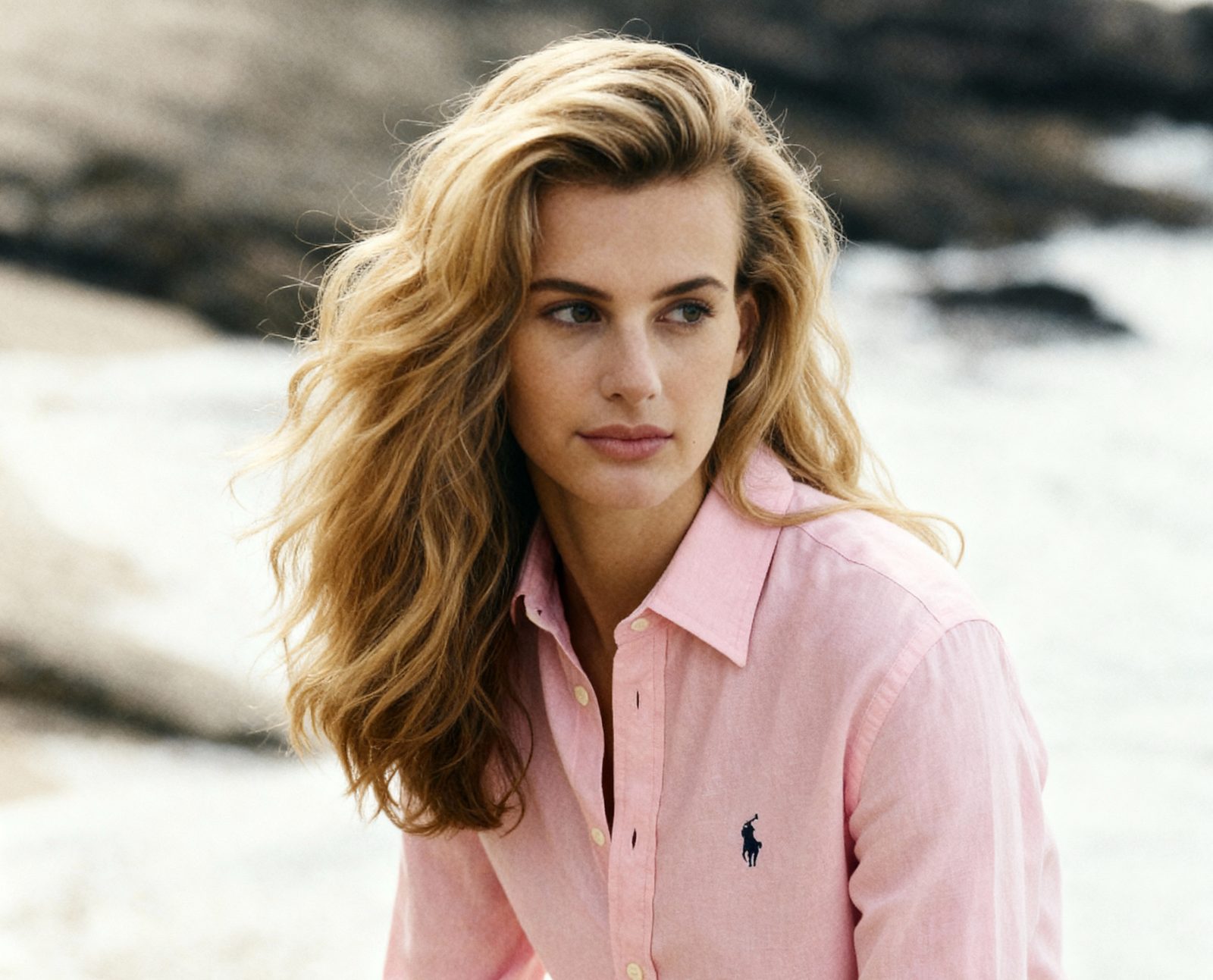
Fashion Product Photography: The Visual System That Sells Apparel and Accessories Online
For a fashion brand, the product photo is not an illustration of the sale. It is the sale. A customer cannot feel the weight of the wool, try the jacket on a shoulder, or check how a hem falls when they walk. Everything they will ever know about a garment before they pay arrives through a screen, in a handful of images. Get those images right and the rest of the funnel has something to work with. Get them wrong and no amount of paid traffic, email, or discounting will fix a page that fails to answer the only question a shopper actually has: what is this, and will it be right for me?
This guide covers the shots a fashion brand needs, what each one is for, and, just as important, where each one actually gets used, from the product page to email to the Instagram grid. Apparel photography, clothing photography, fashion product photography: different names for the same job. It is the hub for our deeper pieces on retouching, virtual try-on, shoppable video, and the product page that converts. Start here, then go deep where it matters for you.
Why Fashion Is the Hardest Category to Shoot
A candle looks the same on everyone’s shelf. A dress does not look the same on every body, in every light, at every angle, and the customer knows it. That is what makes apparel uniquely demanding to photograph. You are not documenting an object; you are answering a string of anxious questions before they are asked. How does this drape? Does the color hold up in daylight? Where does the hem hit? Is the fabric stiff or fluid? Will it look like this on someone who is not a sample-size model?
Those questions decide your return rate. Online apparel comes back at a rate that would sink most other categories, and the leading reason, year after year, is the same: the item did not fit, or it did not look like the customer expected (a pattern McKinsey and most retail-returns research land on consistently). Both failures trace straight back to imagery. A photo that flatters a garment into something it is not does not win a sale so much as postpone a return: the customer buys, the parcel arrives looking like a different item, and it comes back, taking your shipping margin and their trust with it. Good fashion photography is not about making clothes look their best. It is about making them look true, at their best.
The Shots You Actually Need (and Where Each One Goes)
A fashion product page usually carries 5 to 8 images, and most brands waste half of them on near-duplicates of the same angle. There is no single “product photo.” There is a set of shot types, each doing a specific job in a specific place, and a brand that skips one tends to lose the sale at exactly the moment that shot would have closed it. Here is the working set: what each one is for, and where it actually belongs.
Flat Lay
The garment styled flat and shot from directly above. It is cheap, fast, and endlessly reusable, and it is excellent at showing a full outfit, color stories, and how pieces combine. It is useless at showing fit, so it is a merchandising and storytelling tool, never a substitute for seeing the garment on a body. Everlane built a recognizable brand language largely on clean, consistent flat lays, and the lesson there is consistency, not cleverness.
Where it goes: 1 to 3 shots in the product-page gallery as secondary images, plus heavy use in email, the Instagram and Pinterest grid, and lookbooks. Rarely the main listing image, because it does not answer the fit question.
Ghost Mannequin
The garment shot on a mannequin, which is then edited out so the piece holds its own three-dimensional shape with no model and no form inside. This is the workhorse of apparel catalog work. It shows true cut, neckline, and structure without the distraction or cost of a model, and it scales across a large range cleanly. For basics, knitwear, and anything where shape is the selling point, it is the most cost-efficient shot that still answers the fit question. Execution is the whole game: a sloppy composite reads as cheap instantly, so the edit matters as much as the shoot.
Where it goes: often the main product-page and category-thumbnail image because it is clean and consistent, plus front, back, and side angles in the gallery. It is the standard for marketplaces like Amazon and Zalando and for wholesale line sheets, where a uniform look across every SKU is the point.
On-Model
The non-negotiable. A garment on a real person, shot cleanly from the front, back, and side, ideally with some movement. This is the shot that answers the questions returns are made of: where it falls, how it moves, how it reads on a body rather than a hanger. Brands that keep returns down shoot on-model across a genuine range of sizes and body types, not as a gesture but because a customer who can see the garment on a body like theirs buys with more confidence and sends less back. If you do one thing well, do this. The page mechanics around it are in building a fashion website that converts.
Where it goes: frequently the main product-page image (Amazon requires an on-model main image for adult apparel), plus 2 to 4 poses and angles in the gallery. It also drives category thumbnails, lookbooks, social, and paid ads, because it carries both information and aspiration at once.
Detail and Texture
The macro close-ups: weave, stitching, hardware, the hand of the fabric, the finish on a button. These shots carry the perception of quality, and they are the cheapest way to justify a premium price. A customer cannot touch your coat, so the texture shot does the touching for them. Skip it and a 400-dollar wool coat looks suspiciously like a 60-dollar one. This is where craftsmanship becomes visible and where price stops being an argument.
Where it goes: 1 or 2 shots in the product-page gallery, and a strong performer in email and paid ads when you need to sell quality or highlight a feature that sets the piece apart.
Lifestyle
The garment worn in a real context: on a street, in a room, in a life the customer wants. Lifestyle shots sell the feeling and the world around the product, which is what people actually buy in fashion. They convert browsers who are sold on the idea but not yet on the item, and they are the raw material for ads, social, and brand collaborations. The trap is letting the styling swallow the product. A beautiful image where you cannot quite tell what is for sale is a mood board, not a sales asset.
Where it goes: 1 or 2 secondary images on the product page for context, and then everywhere in marketing: Instagram, Pinterest, paid ads, email, homepage banners, and lookbooks. This is your most reusable marketing asset per dollar shot.
Editorial and Campaign
The art-directed imagery that defines what the brand stands for rather than what a single product does. Editorial is where a label like Jacquemus turns a handbag into a cultural object and where a season gets its identity. It does not need to sell a SKU; it needs to make people want to belong to the brand. It is the most expensive tier to produce the traditional way, and the first place AI is rewriting the budget, which we get to below. The work that ties campaign imagery back to a coherent identity is the subject of visual storytelling.
Where it goes: lookbooks, homepage and collection banners, social hero posts, the big paid pushes, PR and press features, and occasionally a single hero frame on the product page. It is planned per collection or campaign, not per product.
Social and UGC-Style
The deliberately unpolished, native-to-the-feed content: phone-shot, creator-made, real. Gymshark built a billion-dollar brand largely on this register, and Gen Z trusts it precisely because it does not look like an ad. This is its own discipline, not a lower-effort version of catalog work, and the goal is credibility rather than gloss. Turning it into a repeatable system is covered in creator commerce and turning followers into customers.
Where it goes: TikTok, Instagram Reels and Stories, and the feed, where discovery now happens, plus a “real customers” block on the product page for social proof and a strong slot in paid social, where UGC-style creative usually beats polished studio ads.
From a Pile of Photos to a Visual System
A brand does not win on individual great photos. It wins on a recognizable visual language repeated until it becomes unmistakable: the same crop logic, the same light, the same color grade, the same model direction, season after season. Aritzia, COS, and Mejuri are recognizable in a thumbnail with the logo cropped off, and that recognition compounds into an asset. The opposite, a product page where every image was clearly shot by a different person on a different day, signals that nobody is in charge, and shoppers feel it even when they cannot name it.
The fix is a visual system: a documented set of rules for each shot type, applied to every product, so the catalog reads as one brand rather than a hundred separate shoots. That is the difference between a freelancer-of-the-month approach and a brand that looks like itself everywhere. It is also where the choice between a creative director and a producer matters in practice: direction sets the system, production runs it.
What AI Changes, and What It Doesn’t
Strip out the hype and here is what AI actually does. It is not a button that invents your product. It is a tool for building the environment around a real garment at a fraction of the old cost and time. Your product stays real, shot once and shot properly, and AI extends it into the backgrounds, scenes, seasons, and campaign worlds that used to require a new location, crew, and day rate every time. A single well-photographed jacket becomes a summer rooftop, a winter street, and an editorial set, art-directed by a person and finished by hand in post.
What this changes is the economics of variety. Most small brands shoot 1 flat lay and 1 on-model image not out of taste but out of budget. AI collapses the cost of the 5th, 10th, and 20th asset, which is exactly where lifestyle and campaign imagery used to be out of reach for a brand doing 7 figures rather than 9. The risk is the obvious one: generic AI output that looks like everyone else’s, with a product that melts at the edges. The fix is not less AI. It is human art direction, a real product at the center, and retouching that tells the truth. We unpack the conversion side in how AI became fashion’s most important growth lever and the fundamentals in AI and machine learning for fashion eCommerce.
Video, 360, and Try-On
Still images answer part of the fit question. Motion answers the rest. Video shows drape and movement in a way no static frame can, which is why catwalk-style clips on the product page have become standard for any brand serious about conversion. ASOS put runway-style video on product pages years ago for a reason: a garment in motion sells itself and heads off the “it hangs differently in real life” return. The same footage then carries into short-form and shoppable video on social, where discovery now lives. The system for that is in livestream and shoppable video.
The 360 spin and AR try-on go further, letting a shopper rotate the garment or see it on themselves. Zara and a wave of brands have rolled out try-on tools precisely because the closer you get to the in-store experience, the fewer items come back. These are not gimmicks; they are return-reduction tools that happen to look impressive. The caveat is that they only help when the underlying imagery is true to begin with. A polished AR experience built on a misleading base photo just delivers the disappointment faster. The full picture is in virtual try-on technology.
3 Mistakes That Cost You Sales
These 3 mistakes do most of the damage, and none of them feel like mistakes while you are making them.
- Retouching that lies. Slimming the model, deepening a color the fabric does not have, smoothing away texture: every flattering edit the product cannot live up to is a return waiting to happen and trust being spent down. Honest retouching is a brand-safety decision, not only an aesthetic one, and we make the full case in ethical retouching.
- Inconsistency. A catalog shot across a dozen freelancers with no system reads as amateur even when each individual image is fine. The brand looks like it is being run by nobody, because visually it is.
- Skipping the unglamorous shots. Brands over-invest in the editorial hero and under-invest in the ghost mannequin, the texture macro, and the on-model range, which are the shots that actually close the sale and prevent the return. The hero image earns the click; the plain on-model shot earns the purchase.
Returns are not only a logistics cost; they erase the margin you worked to build, and the math is in handling returns without killing your margin. A large share of that cost is set at the moment of the shoot.
From One Shot to a Season of Content
Fashion is won or lost on the image, and the image is not one photo but a system: flat lay and ghost mannequin to merchandise, on-model and detail to sell and to hold down returns, lifestyle and editorial to build the brand, social and video to carry it where people actually are. The brands that look expensive are rarely the ones that spent the most. They are the ones that built a visual system and ran it with discipline, and increasingly the ones using AI to produce the variety that used to be a budget privilege.
That is the work Tuple Strategy does. We take a brand’s product, a catalog shot, even one taken on a phone as long as it is in scale and well lit, and produce the full set of on-brand visual assets around it: still life, lifestyle, social, and campaign, built with human art direction, our own model trained on fashion, jewelry, and beauty, AI for the environment at scale, and hand retouching that keeps the product true. One shot in, a season of content out. Tell us what you are launching, and we will show you what your catalog could look like.